Our Model
Build, Train, Govern — a sequence, not a menu.
Each stage depends on the one before it. Skipping ahead undermines all three.
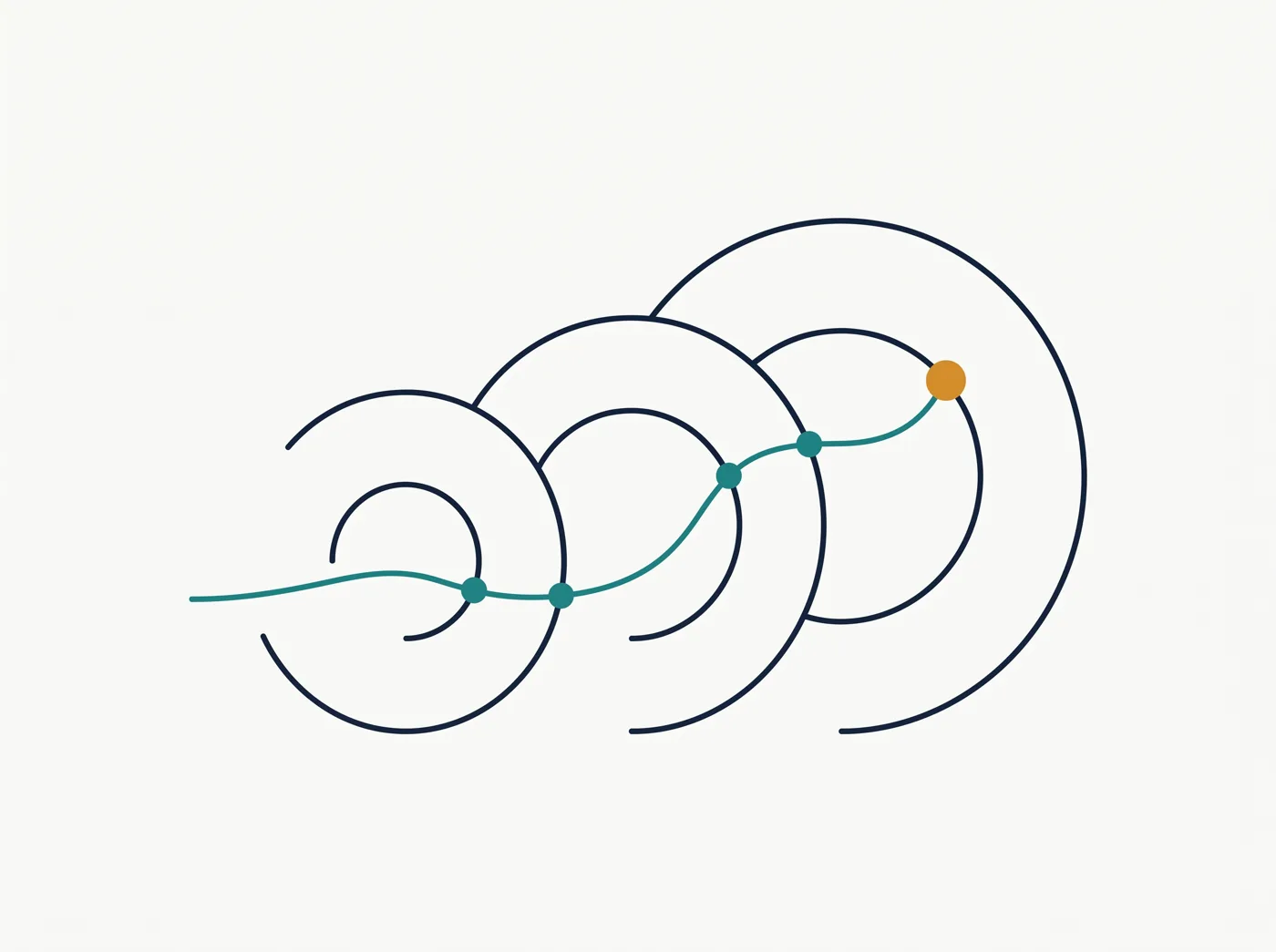
The Sequence
01 — Build
COGVATION designs the client’s Aircrew Cognitive Training (ACT) curriculum from the ground up: the core competencies, the scenario library that exercises them, and the assessment approach. Built specifically for the client’s fleet, operating environment, and existing safety culture — never a shared, off-the-shelf template.
02 — Train
COGVATION certifies the client’s own instructors to deliver ACT directly to their own pilots and maintenance technicians. COGVATION does not stand at the front of the client’s recurring classes indefinitely; it certifies an internal ACT Instructor Corps so the client’s own people deliver the program, class after class.
03 — Govern
COGVATION stands up a Cognitive Cooperation Council (CCC) for the client: a governance and event-review body that keeps the curriculum current, reviews it against real operational events, and continuously improves it. The CCC is where COGVATION and the client’s leadership meet on an ongoing basis, long after the initial build.
Why This Order Matters
A curriculum without trained instructors doesn’t scale. Instructors without governance go stale.
Building a curriculum first is what makes it specific to the client rather than generic. Training the client’s own instructors next is what makes the program sustainable at scale — a program that only COGVATION can deliver does not survive contact with a real training calendar, covering hundreds of pilots and technicians across recurrent cycles.
Governance comes last because it depends on both. A council cannot meaningfully review a curriculum that does not exist yet, and it cannot function without an instructor corps generating first-hand observations from the training floor. Skipping Govern is how curricula quietly drift back into the generic, disconnected training COGVATION was founded to replace.
A Contracted Service, Not a Department
What transfers is capability. What doesn’t transfer is COGVATION.
Together, Build, Train, and Govern describe a contracted service relationship, not an internal department. COGVATION remains a separate company throughout every engagement — there is no shared ownership, no embedded staff left behind, and no absorption of COGVATION’s materials into the client’s own org chart.
What does transfer to the client is capability: a certified internal ACT Instructor Corps able to run the program independently, and a functioning Cognitive Cooperation Council that keeps it current. That distinction is what keeps the relationship a partnership rather than a hand-off.
The Cognitive Cooperation Council
What the CCC is, and what it does.
The Cognitive Cooperation Council (CCC) is the governance body COGVATION stands up for each client during the Govern stage. It brings COGVATION and the client’s leadership together on an ongoing basis — long after the initial curriculum build is complete.
The CCC’s function is event review and continuous improvement: it examines how the ACT curriculum performed against real operational events, and updates the scenario library and assessment approach accordingly. It is the mechanism that keeps a fleet-specific curriculum from calcifying into exactly the kind of generic, out-of-date training COGVATION was founded to replace.